
Stay a while and listen
When I first saw an arcade machine, I knew it was something different, something special. The alien bleeps and phosphorous glow of the screen felt like a siren call. I had no idea what I was getting into, but I knew I wanted to keep feeding in coins to blast those Invaders. That machine in the corner of the event hall was far more appealing than whatever family gathering I was supposed to be paying attention to. There was no time for the dance floor. I had to save the Earth.
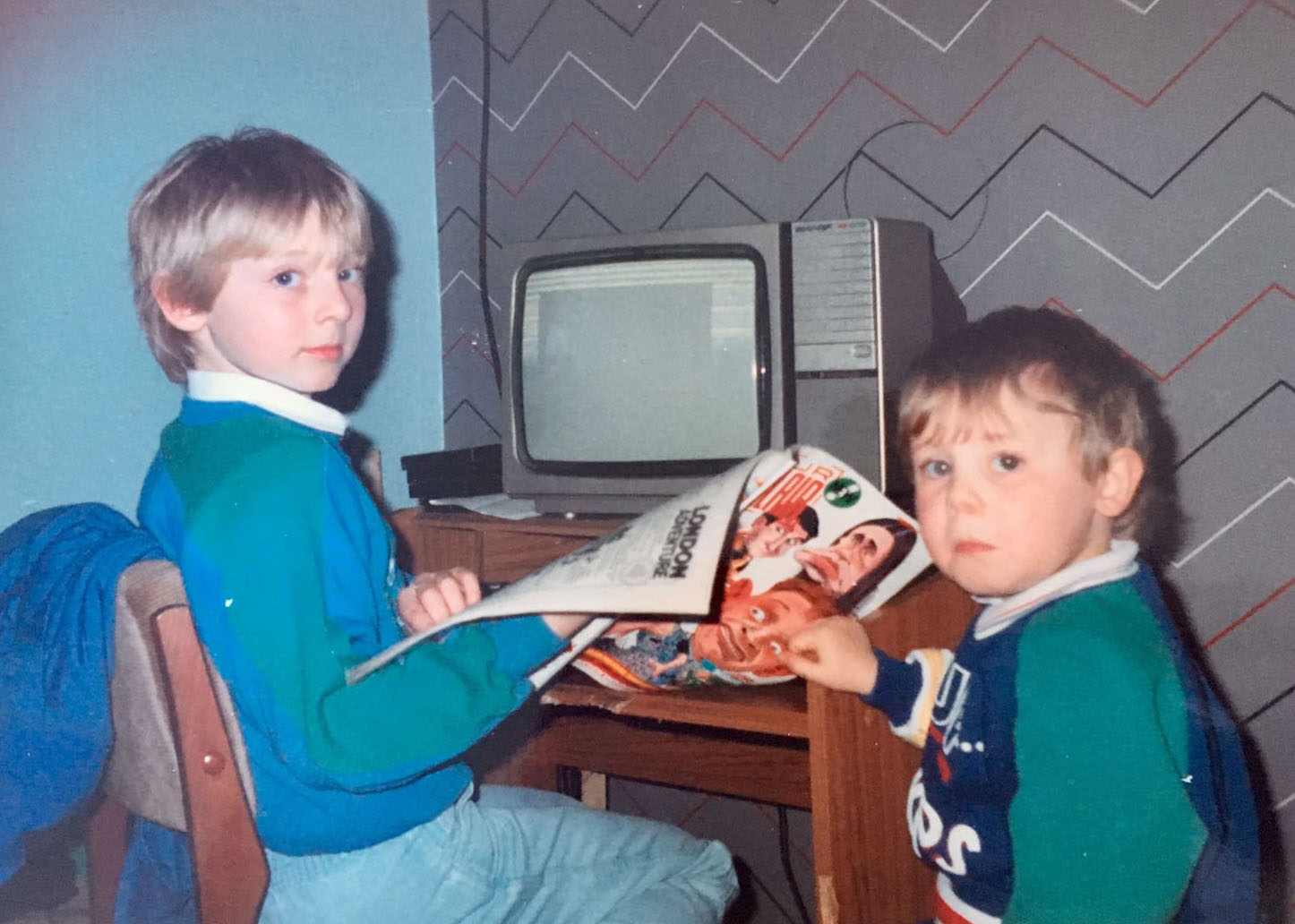
Long loading times were great for reading through game reviews and code listings. (Feb. 1986)
Once I got my first home computer, with its keyboard and programmable interface, there was no going back. I set off on a journey of discovery, writing text adventures, crude 8-bit animations, and of course 10 print "Dean is cool".
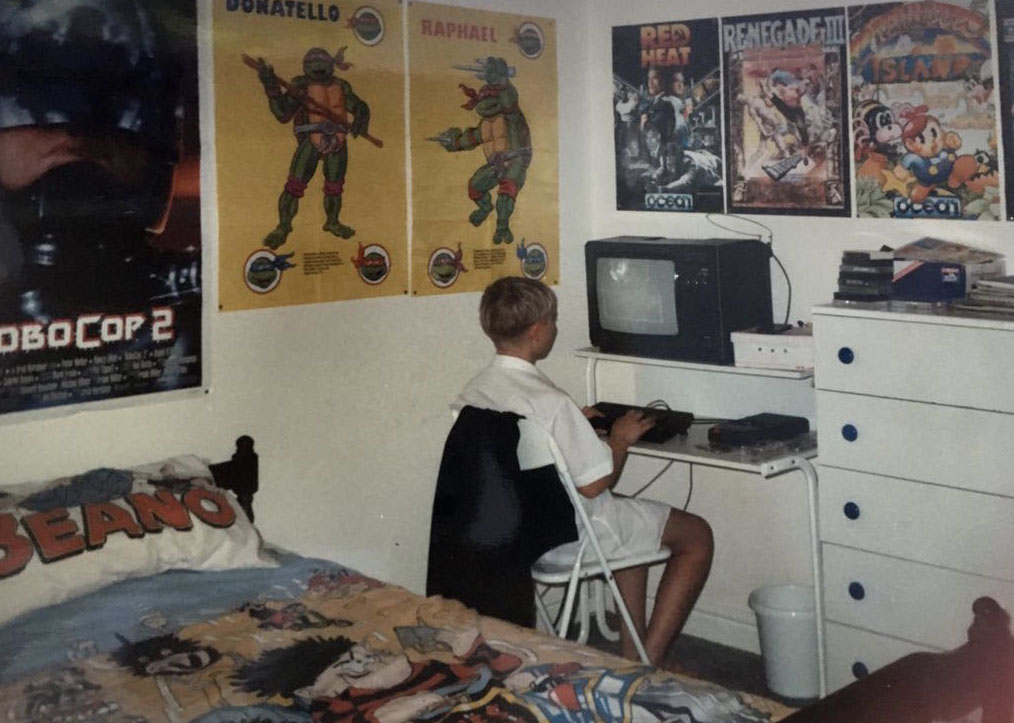
Post school-day gaming session. (Early 1990)
As much as I loved playing games, making them was even more rewarding. You could know every line of code and still be surprised by what the machine did. Most of those surprises were bugs, of course, but sometimes they were emergent moments that caught you off guard. No other medium came close to creating that kind of magic.
Surfing on Cyber Waves
Making games stayed with me throughout my teens, yet when it came time to enter the workforce, I never seriously considered it as a career. The simple truth is that I never made the mental leap to believing it was something I could actually do. I said I wanted to make games for a living, but somehow I didn't take my own words seriously enough.
I didn't go down some boring career path, though. I was still driven to work with computers. After a stint building PCs, I landed a role developing these strange new things called websites, all connected using this fascinatingly odd Internet thing.
I already had early experience with the Web and related internet tech, largely thanks to games and being part of the modding scene. Modding meant taking an existing game and changing or adding to it to create something new. That spirit had existed long before games went mainstream, but in the mid-'90s, with games like Doom, it really took hold. So my days were spent building websites and early web applications like shopping carts and databases, while my nights were spent making levels and sprites for Doom and Quake.
Enter the Matrix
Something shifted in the late '90s. As much as I enjoyed creating for the Web, I found myself becoming more and more obsessed with making games. I finally started paying attention to job postings in magazines — they wouldn't print them if this wasn't a real career, right? — and decided to take the plunge.
I entered the games industry as a Game Tester at Silicon Dreams, ready to prove myself. Over the following years, I moved through a range of roles: Lead Tester, Game Designer, Lead Designer, and Producer, across a number of companies (see the GAMES section for more).
Working with a lot of great people, and a few less great ones, across different roles gave me a real appreciation for what it takes to make a full game. The trials and tribulations. The blood, sweat, and tears. The reality that games are often built on little more than passion, carried through tight timelines, limited budgets, and plenty of conflicting pressures.
Burnout is real. It can leave you questioning whether it's all worth it, especially when you feel stuck in a cycle of building one less-interesting game in the hope that the next one will be The One™, only to find it isn't, and the cycle begins again.
Taking a Walk
After nearly eight straight years of building games across different genres and platforms, I felt the need to break that cycle. I couldn't see a fresh challenge on the horizon, so I took the opportunity to step away, get some air, and spend time in that other world: the non-digital one.
I set off on a globe-spanning trip to see what was out there. It didn't just refresh me, it gave me the chance to experience new activities, see incredible places, and come back genuinely inspired. From a game development perspective, it made me think more deeply about the real-world places and experiences we try to recreate in virtual worlds. There is nothing more inspiring than first-hand experience. I decided to treat the trip as R&D, with a side order of much-needed recovery.
The Comeback Kid
During some travelling downtime, I found myself looking at the then-recently launched App Store that arrived alongside the iPhone. Working remotely with a dev team, I got to scratch that creative itch again and helped make a number of iPhone games. One of them was the fastest game I've ever worked on, built in around 24 hours. There is something uniquely satisfying about embracing a brutal deadline and actually hitting it.
After working on mobile, I got mobile again myself and continued my trip — sorry, my R&D project. Eventually, that road led me back to the kind of challenge I had been hungry for: something bigger and more ambitious. So I traded the backpack for a house and joined BioWare as a Senior Designer, working on the next Dragon Age game.
Working on AAA games with massive teams was a new experience. At its core, it was still the same process of making a game, just at a much larger scale and with far more people involved.
A Bigger Smaller Challenge
After half a decade working on AAA titles with large teams, I found myself craving a different kind of challenge. It wasn't about bigger teams or bigger budgets. It was about taking on something broader in scope and more personal in execution. That meant starting a small company and using the full range of my cross-disciplinary skills in a small team to build new games, and even products beyond games.
That path gave me the chance to experience first-hand the challenges of building for VR. As I said, there is nothing more inspiring than first-hand experience, so the R&D trip paid off. From VR, we went on to explore the web browser as a platform, which became known as Web 3.0. This gave my '90s web knowledge a welcome refresh, along with ways to integrate payment systems directly into the heart of applications.
A Helping Hand
After more than thirty years of developing games and software -- from being a curious kid hammering at the keyboard to being a much older kid doing much the same -- I look for ways to help others reach their goals and turn ideas into reality.
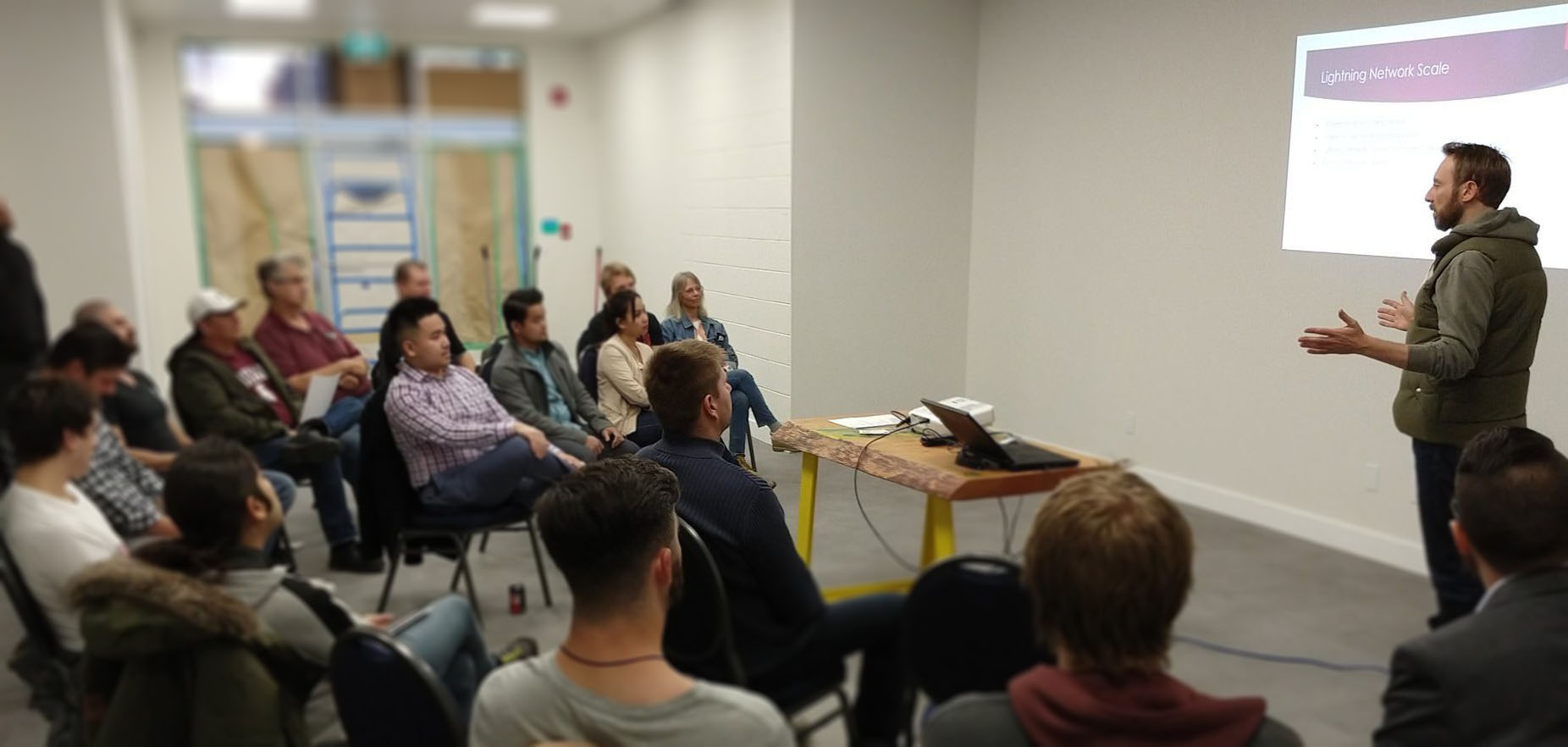
Presenting Lightning Network. (Oct. 2018)
I'm excited about what the future will bring, where it will take my talents, and how much longer this bio might still become.